
The History of CJNV
Founding Story
On May 19, 2014, the Israeli army uprooted hundreds of fruit trees on Daoud Nassar’s family farm, the Tent of Nations, located just south of Bethlehem in the West Bank. The Tent of Nations is an internationally known educational and environmental meeting center where people from around the world come together. The Nassar family has lived on this land for the last century, despite efforts by the Israeli government to displace them.
When Daoud was asked how Jews around the world could support his family, he replied: come replant the trees with us in a show of solidarity, to demonstrate that the Israeli Army’s bulldozers don’t represent your Jewish values.
Nine months later, in February 2015, twenty-five Jews from the US, Canada and Europe spent a week replanting trees on the farm and the Center for Jewish Nonviolence was born. CJNV was founded on the idea that solidarity between Jewish and Palestinian communities is both powerful and necessary to build a just future.
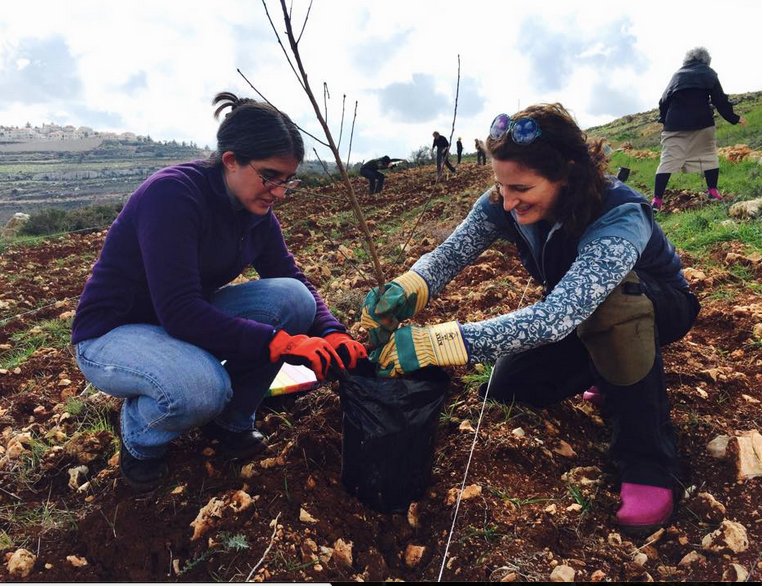
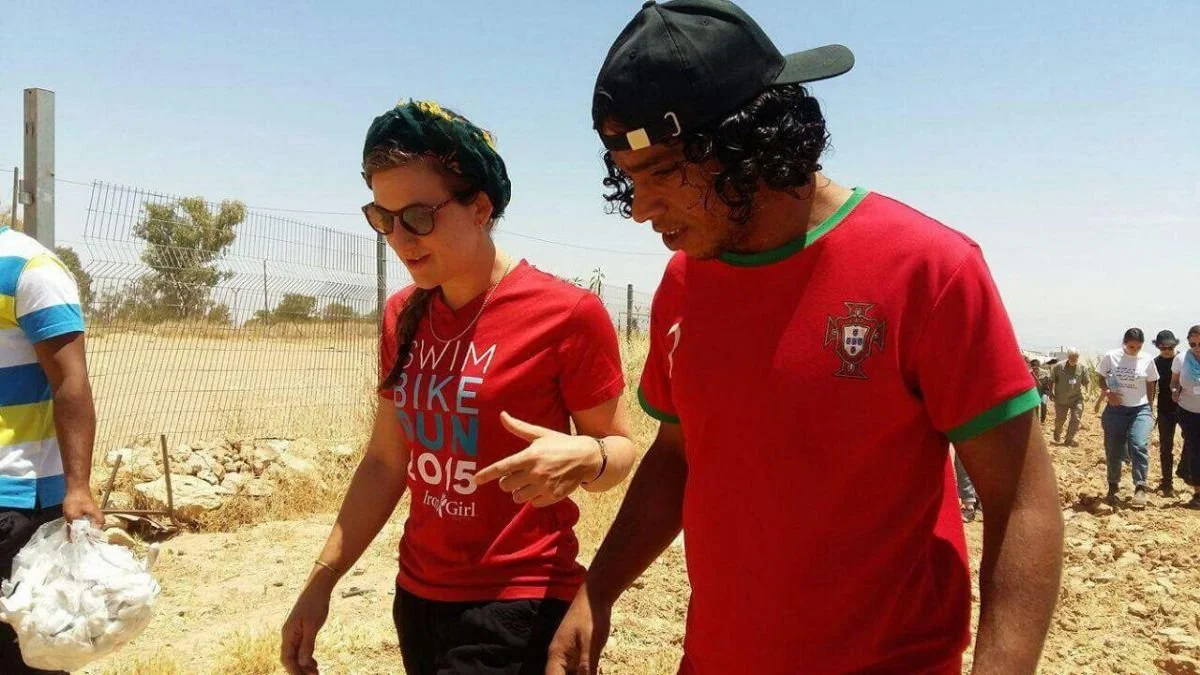
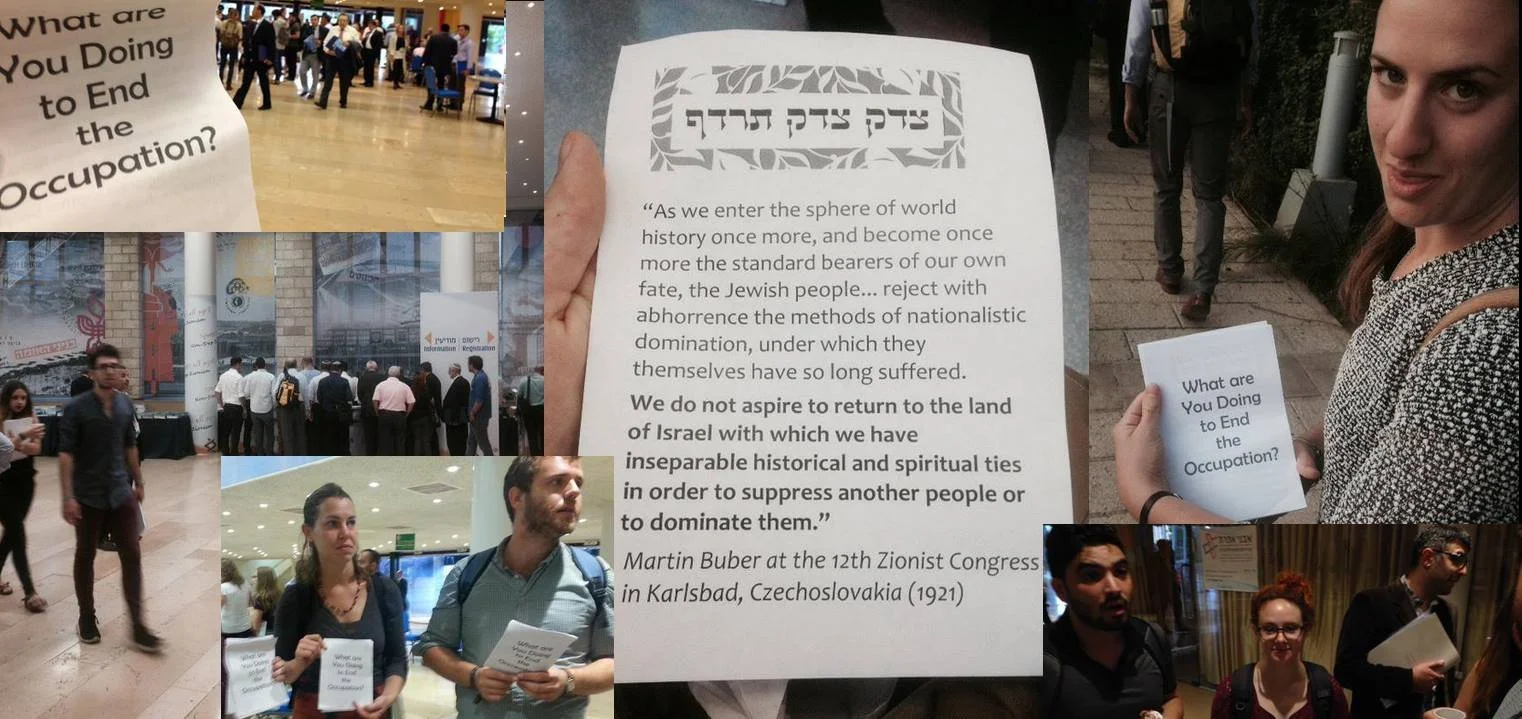
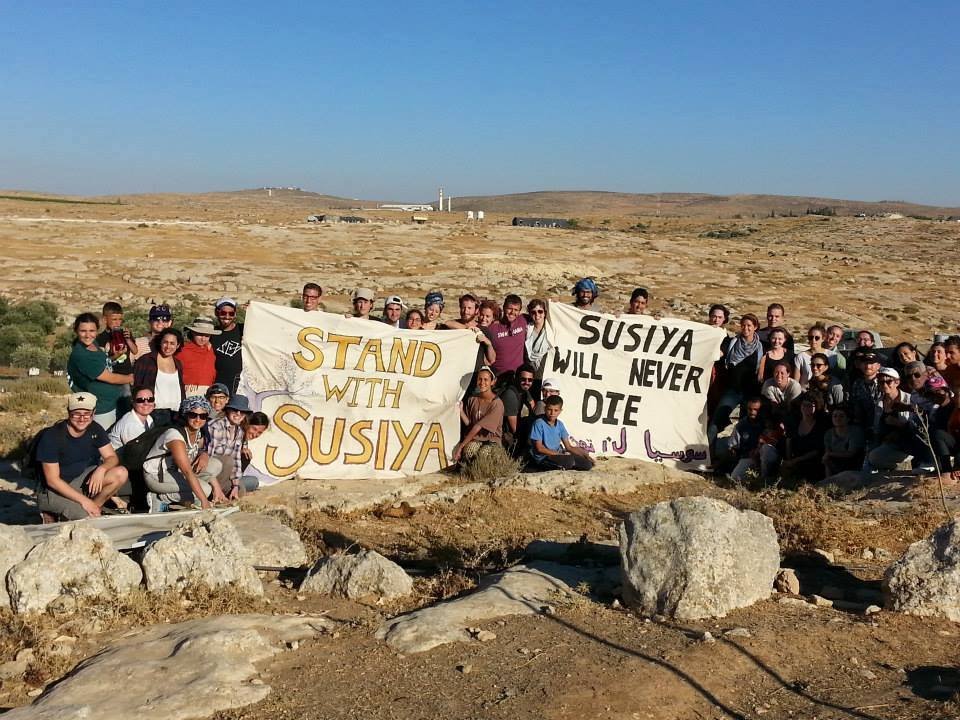
Images, clockwise from top left: planting trees at Tent of Nations; an activist with CJNV and Awdah Hathaleen from Umm al-Khair talking; a collage of images from protesting the World Zionist Congress; CJNV joining with others to show support for Susiya.
Direct Action Delegations
Over the next five years, CJNV organized annual delegations to Israel/Palestine, which centered nonviolent direct action, political education, and work projects. These delegations were designed to support the Palestinian-led coresistance movement, change material conditions on the ground by protecting land and building collective power, bring global attention to and deepen participants’ understanding of the injustices of Israeli occupation and apartheid, grow the direct action and organizing skills of activists in this movement, and bridge critical connections between activist communities abroad and on-the-ground.
In October 2015, in coordination with Palestinian and Israeli nonviolent activists, CJNV organized eighteen activists from five countries to protest the 2015 World Zionist Congress. On this same delegation, delegates joined together with Palestinians from Susiya to complete their olive harvest. Jews, Israelis, and other activists from abroad helped Palestinians deter settler violence and harvest their land during this important season.
In July 2016, CJNV brought forty Jewish activists from more than half a dozen countries to join alongside Youth Against Settlements and All That’s Left to reclaim stolen property in Hebron and establish the first cinema in the city. During this delegation, we also worked with communities in Masafer Yatta to clear and till land under threat by nearby settlements and accompanied Palestinians from Susiya as they returned to visit their historic village, which they were expelled from by Israel three decades earlier. We also hosted a block party with residents of Batan al-Hawa, a community at serious risk of displacement in East Jerusalem.
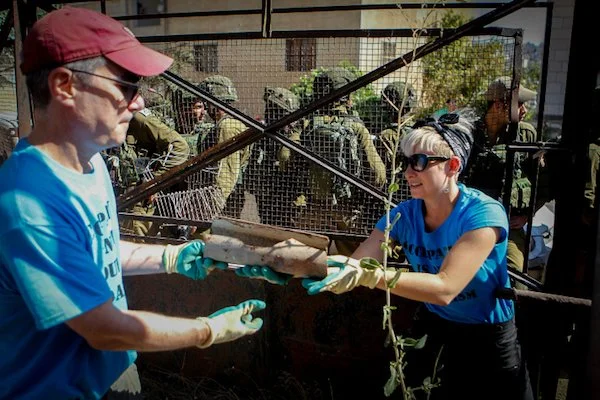
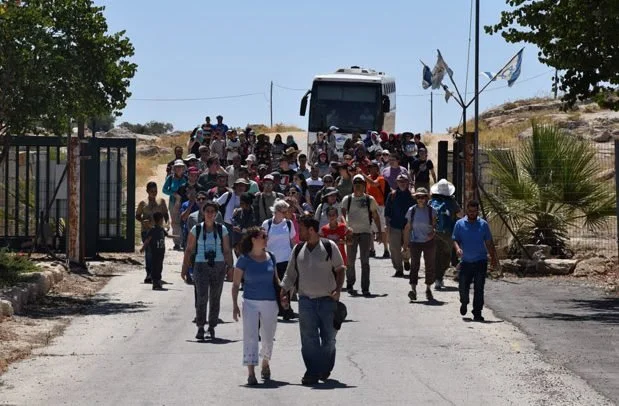
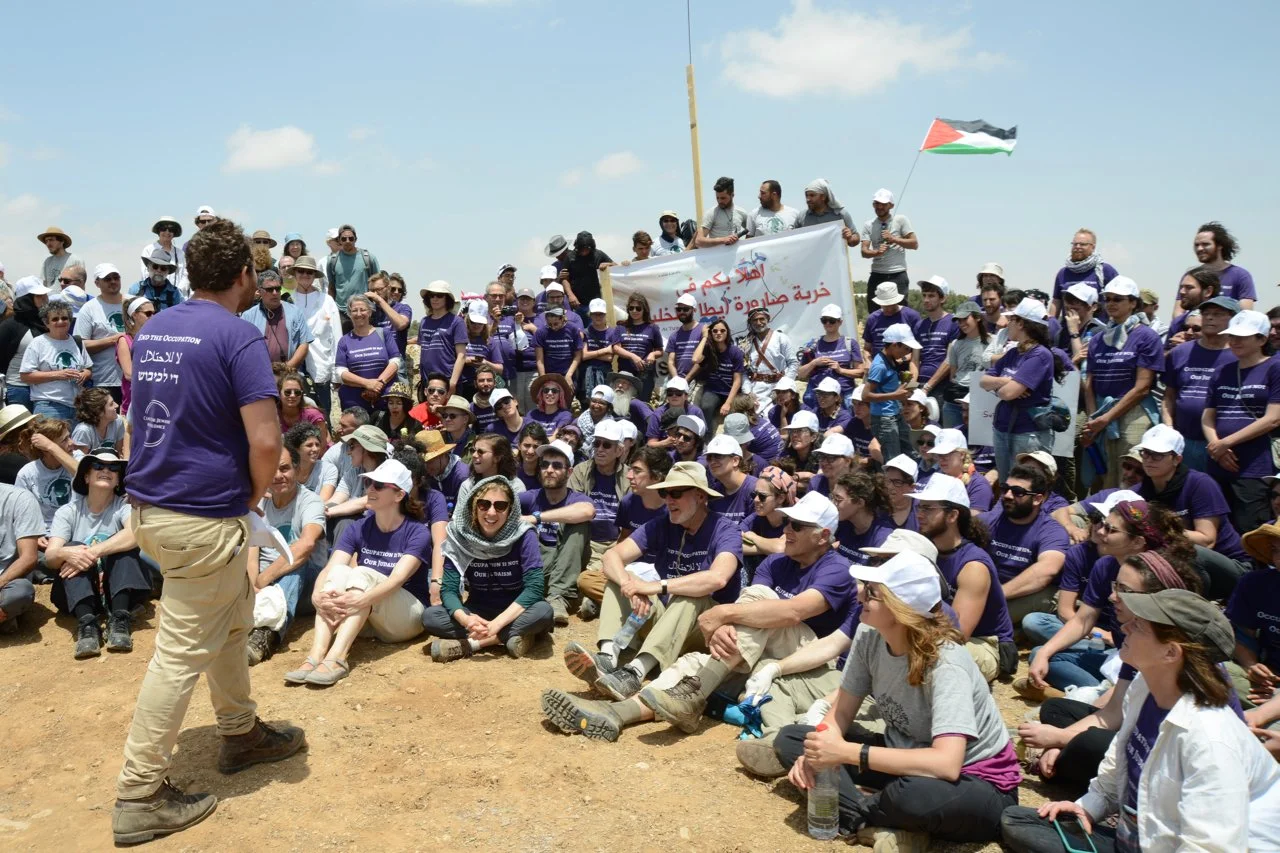
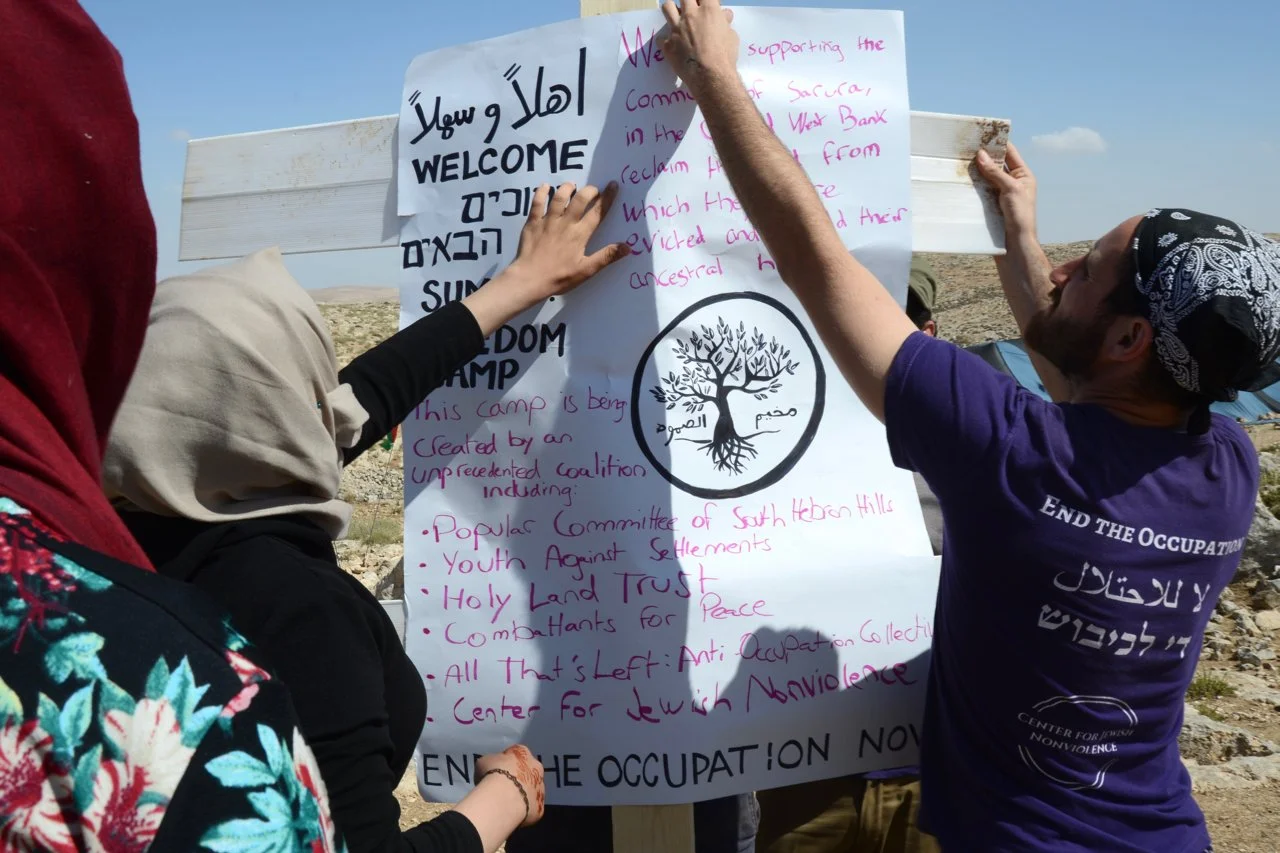
Images, clockwise from top left: clearing debris in Hebron; CJNV activists walk along with Palestinians to Susiya; activists at Sumud Freedom Camp, putting up the entrance sign to Sumud Freedom Camp.
In May 2017, CJNV brought an unprecedented group of 130 Jews to the West Bank to join a historic 300-person nonviolent direct action led by our Palestinian partners to reclaim the stolen land of Sarura after twenty years and establish the Sumud Freedom Camp. This action was an incredible success, as it launched the creation of the Youth of Sumud activist group in Masafer Yatta who have worked diligently to ensure Sarura remains in Palestinian hands despite regular assaults from settlers. During this delegation, we also joined in various existence-is-resistance work projects with a number of Palestinian communities in East Jerusalem, like Issawiya and Batan al-Hawa. After this delegation, which saw a huge growth in our work, we took a year to regroup and strategize for what would come next.
In 2019, CJNV ran two delegations. In the spring, we brought forty-five Jewish activists to work with our Palestinian partners to rehabilitate the historical roads and lands of Bir il-Eid to help ensure freedom of movement, so that Palestinians in the area could access water, electricity, healthcare, and education. During an action that involved over 125 people, Israeli army and police physically assaulted and threw stun grenades at us, and arrested seventeen activists (five Palestinians, seven Israelis, and five Jews from abroad). While Palestinians are usually held overnight or for multiple days, in an unprecedented shift, all of the activists were released together. This action was an important effort to continue building community power for Palestinians in Masafer Yatta and to exemplify our joint refusal to cede to the pressures of settler and military harassment.
In the winter, building off of the recent joint actions organized by Palestinians, Israelis, and Jews from abroad, we came together to reclaim the historic Palestinian Ein al-Beida spring in Masafer Yatta, which had been stolen by a nearby settlement outpost. Our work temporarily restored Palestinian access to this important source of water, affirming the right to water for Palestinians here and across the West Bank. During both the spring and winter delegations, we also worked alongside and learned from communities in Silwan, Abu Kbir, Batan al-Hawa, Givat Amal, and Lyd/Lod.
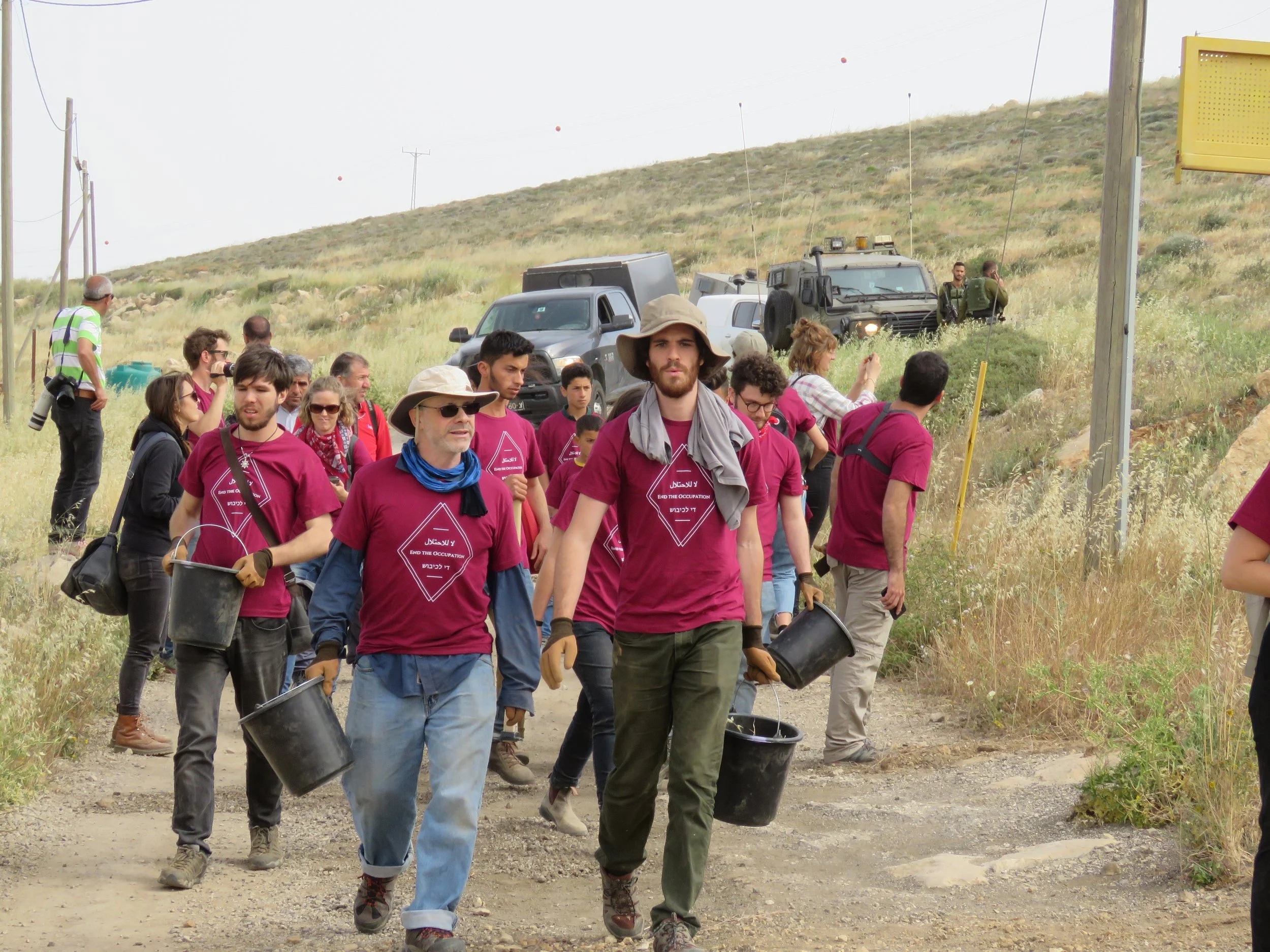
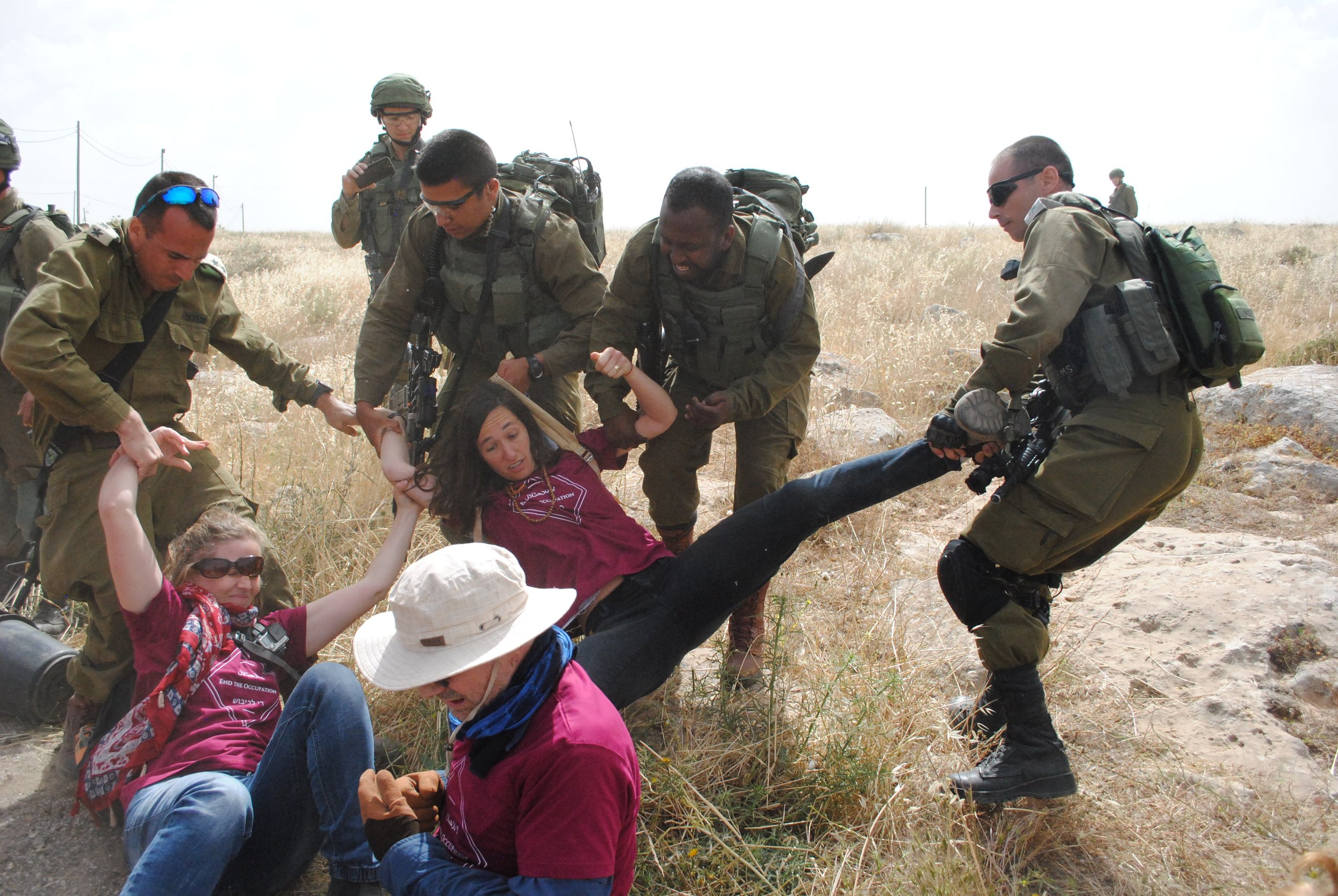
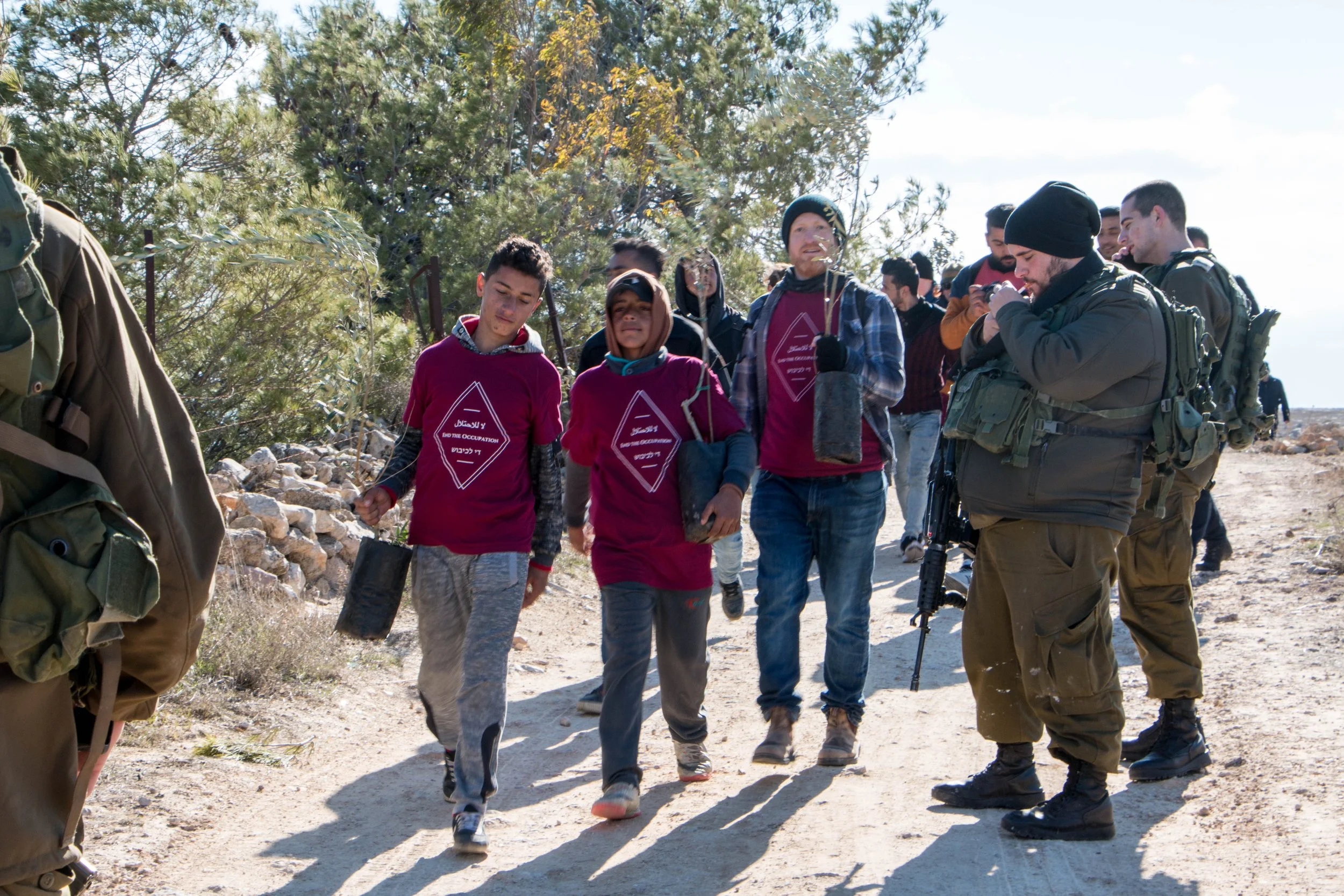
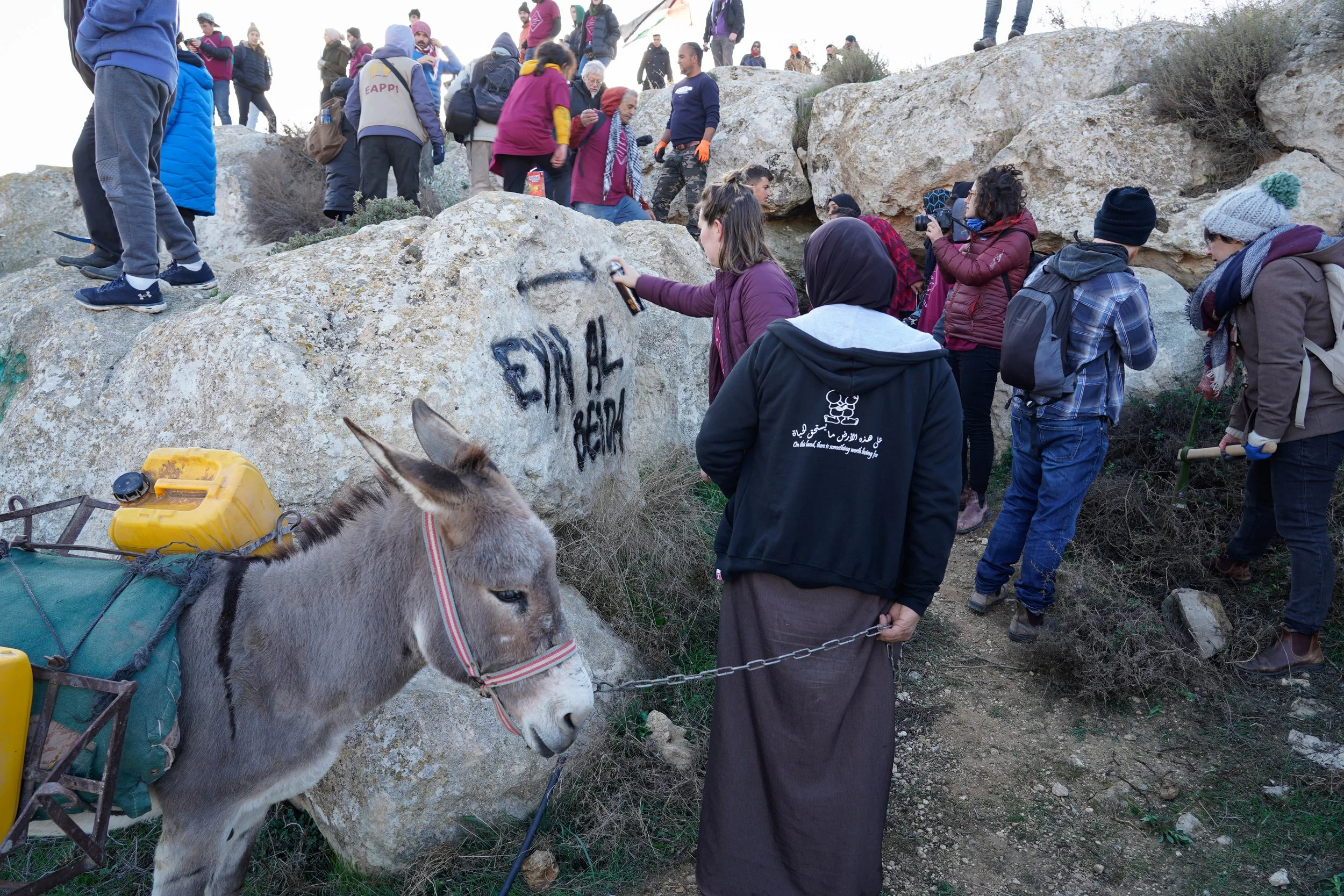
Images, clockwise from top left: CJNV activists and our partners attempting to repair a road with military present; Israeli military and police dragging CJNV activists across the ground; CJNV activists and kids from Masafer Yatta during the action to reclaim the Ein al-Beida spring; CJNV and our partners celebrating the return of Ein al-Beida to Palestinians.
Launching Hineinu and the Olive Harvest
In 2020, during the early days of the COVID-19 pandemic, Palestinian communities in the West Bank became incredibly isolated from the rest of the world. With very few activists present, violence from settlers and soldiers, including demolitions and land seizures worsened to new extremes. We worked closely with our partners about how to address this problem and what role Jews from abroad could play, given our usual 10-day delegation model wasn’t viable in this new reality. In response, we developed Hineinu (meaning “here we are” in Hebrew), our sustained solidarity project which brings a small group of Jewish activists to live and join in coresistance work alongside Palestinian communities in Masafer Yatta for three months during the shepherding season. In February 2021, we ran our first Hineinu cohort and it quickly became clear how important and impactful this new type of coresistance and solidarity was to our partners. Five years later and we have now run six separate cohorts of Hineinu, doubled the cohort size, and helped establish new norms for prolonged solidarity presence in Masafer Yatta.
After we ran our second Hineinu cohortin 2022 and as restrictions related to the pandemic lessened, we knew it was time to expand our work again. We piloted a new project to bring a group of Jewish activists to support Palestinian families and farmers during the olive harvest, an incredibly important time of year for Palestinians and also a time when settlers and soldiers are most actively harassing and attacking Palestinians to prevent them from harvesting their lands. While harvesting in 2023 was made impossible after the post-October 7 Israeli-imposed lockdowns across the West Bank, we continued to successfully work closely with our partners in Burin to support Palestinians during the harvest again in 2024 and 2025.
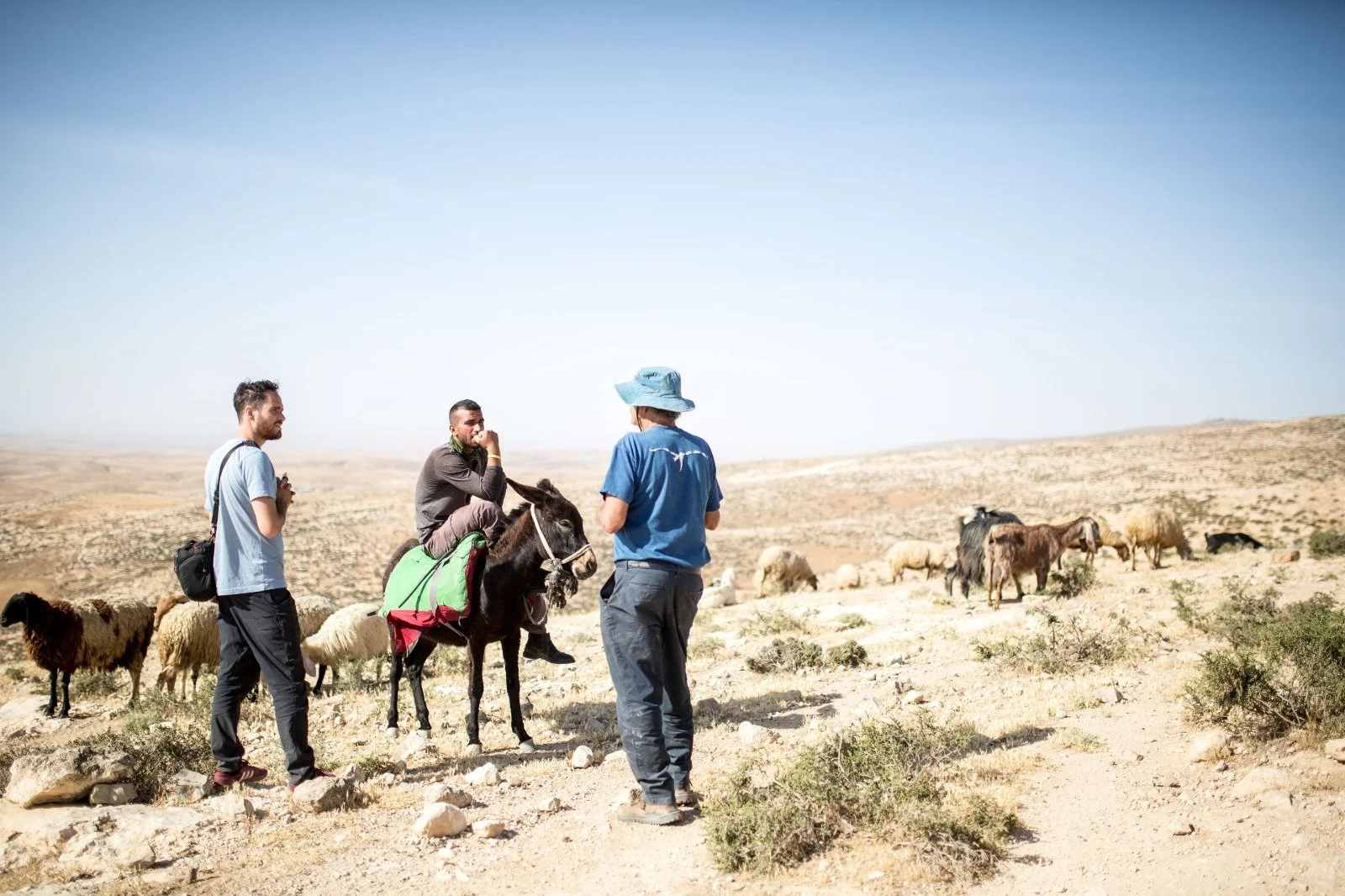
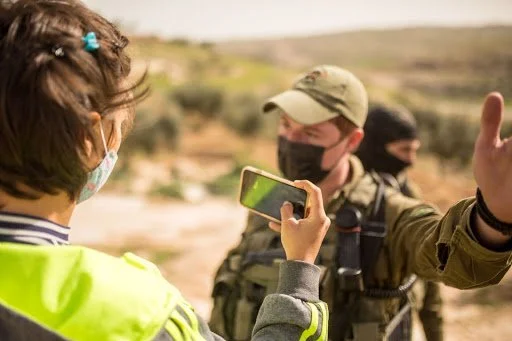
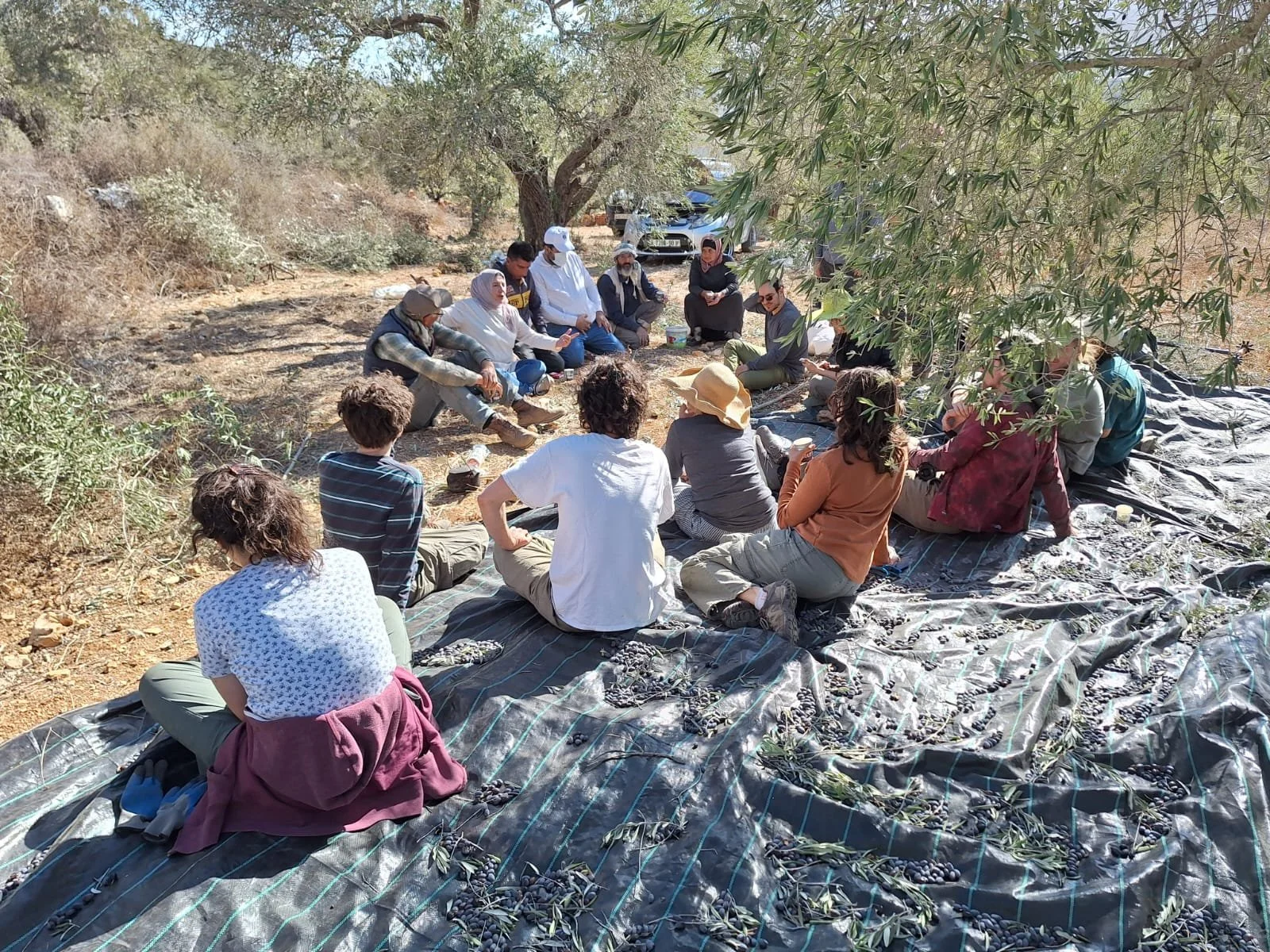
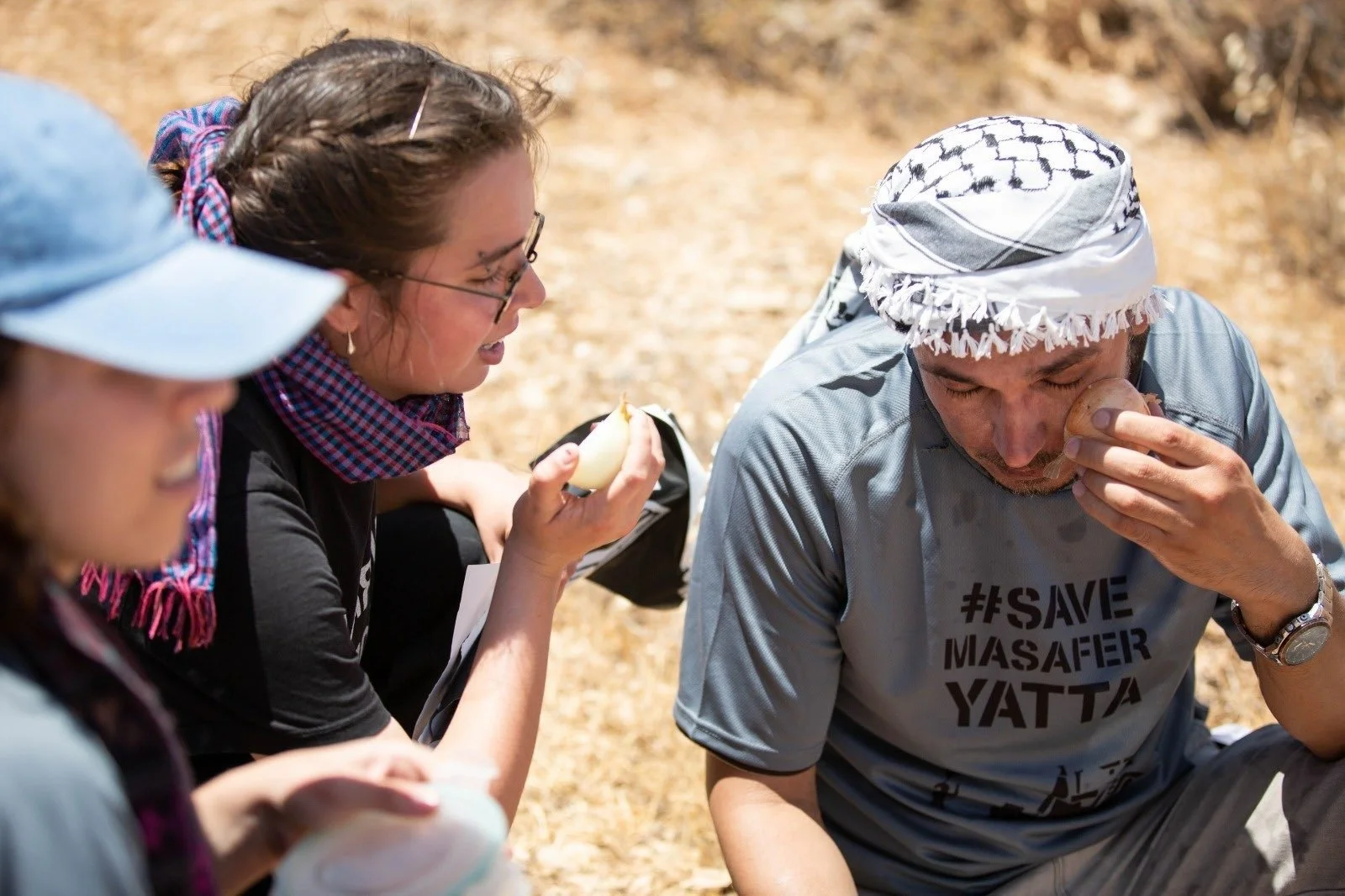
Images, clockwise from top left: two CJNV activists with a Palestinian shepherd in Masafer Yatta; an activist films an Israeli soldier in the field; CJNV delegates with Palestinian farmers taking a break from harvesting olives; Jewish and Palestinian activists using onions to reduce the effects of tear gas during our 2022 action.
In addition to organizing the Olive Harvest in the fall of 2022, we also ran a delegation that summer. This delegation culminated in a high-profile action to protest and bring attention to Israel’s planned ethnic cleansing of Palestinians from the so-called Firing Zone 918. Alongside our partners in Masafer Yatta, we worked to repair one of the main access roads to the Firing Zone – moving boulders, filling potholes, and clearing roadblocks.
In May 2023, CJNV organized another delegation, this time focused on Jerusalem as well as Masafer Yatta. Forty Jewish activists from the US, Canada, and the UK joined us to take part in a number of coresistance and solidarity actions on Jerusalem Day, a day in which thousands of Israelis march through the Old City terrorizing Palestinians and vandalizing their businesses. These actions included spending the day with families and children in the African Community Society, documenting violence, and blocking a highway with our Israeli partners to prevent settlers from joining the violent parades. During the second half of the delegation, we joined with our partners in Masafer Yatta to establish two new playgrounds in Tuba and Sfai, two communities within the Firing Zone where Israel prohibits building of any kind. The two playgrounds are still standing today.
In 2024, in response to the severe increase in settler-state violence after October 7, we knew based on conversations with our partners that running another delegation would not be possible and that ongoing overnight presence from activists was what was most needed. With very little time to plan during a very tumultuous and unpredictable time, we mobilized nearly fifty activists to join us in local rapid response and solidarity presence shifts throughout the summer in a project we called the Summer Solidarity Shifts.
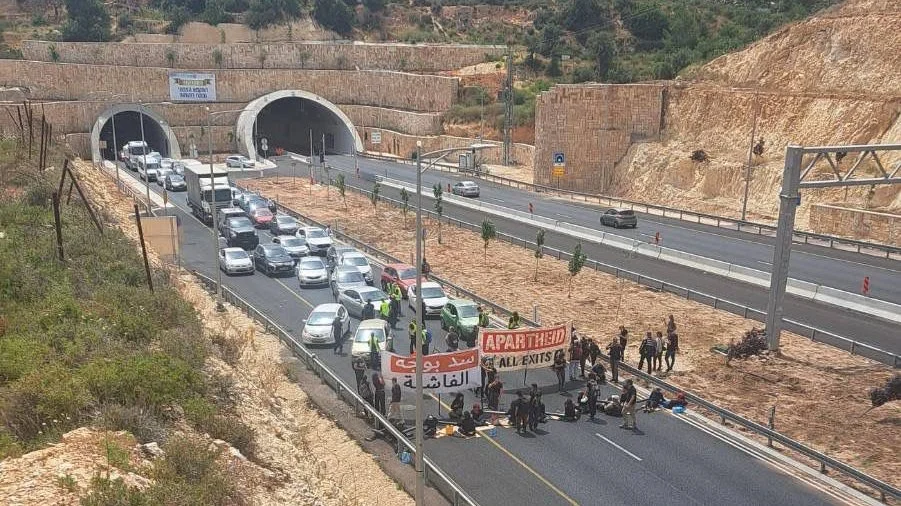
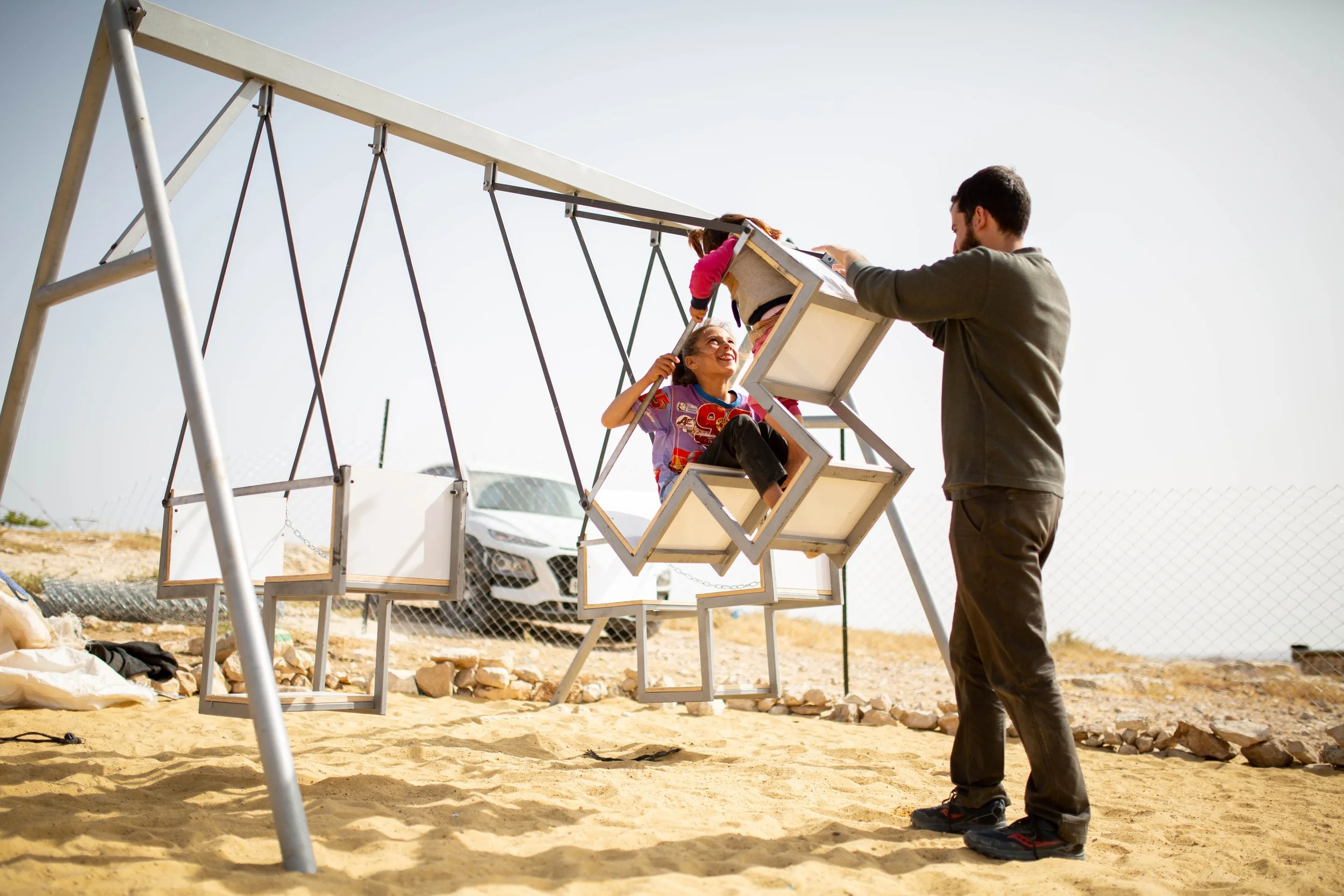
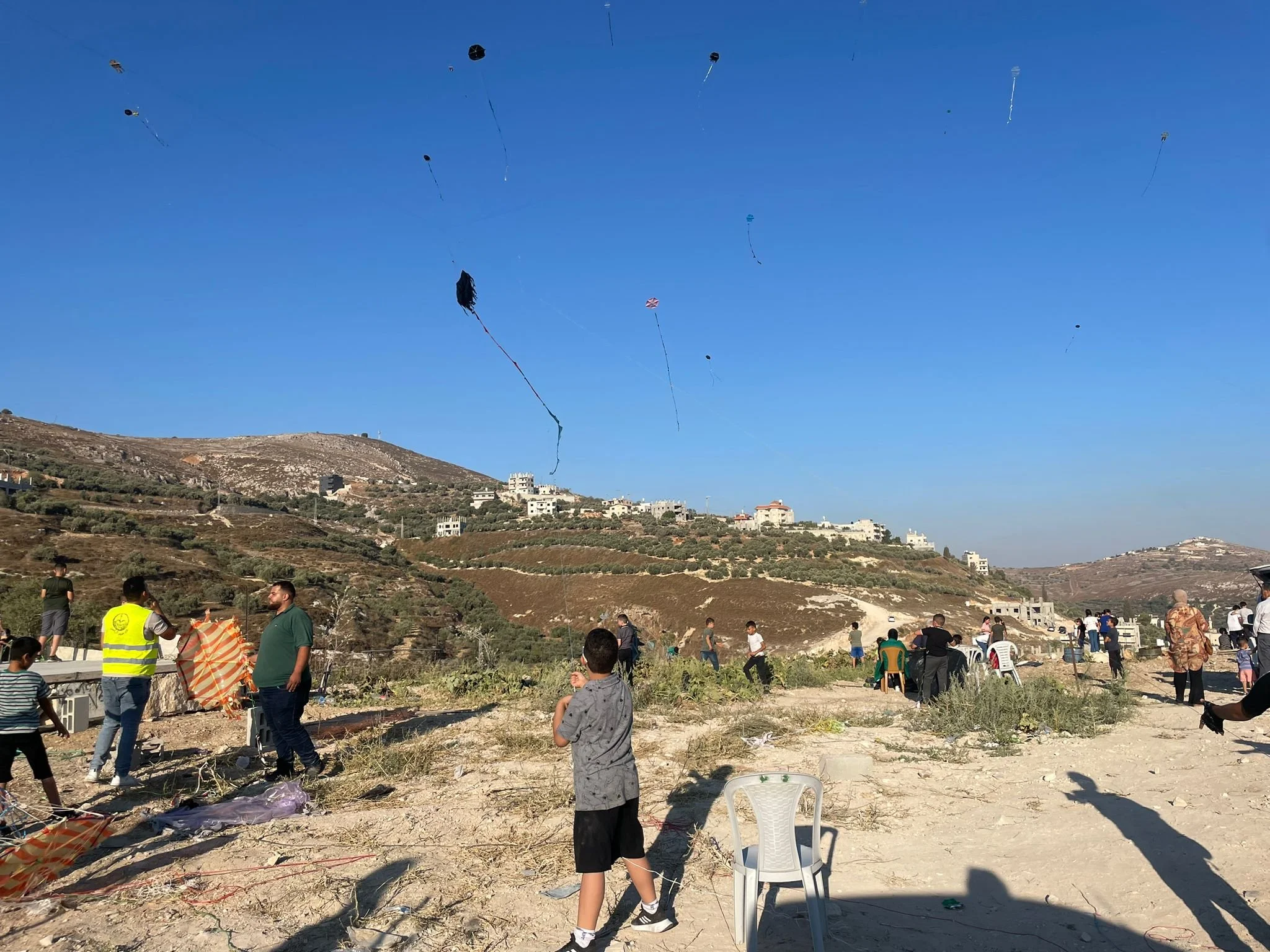
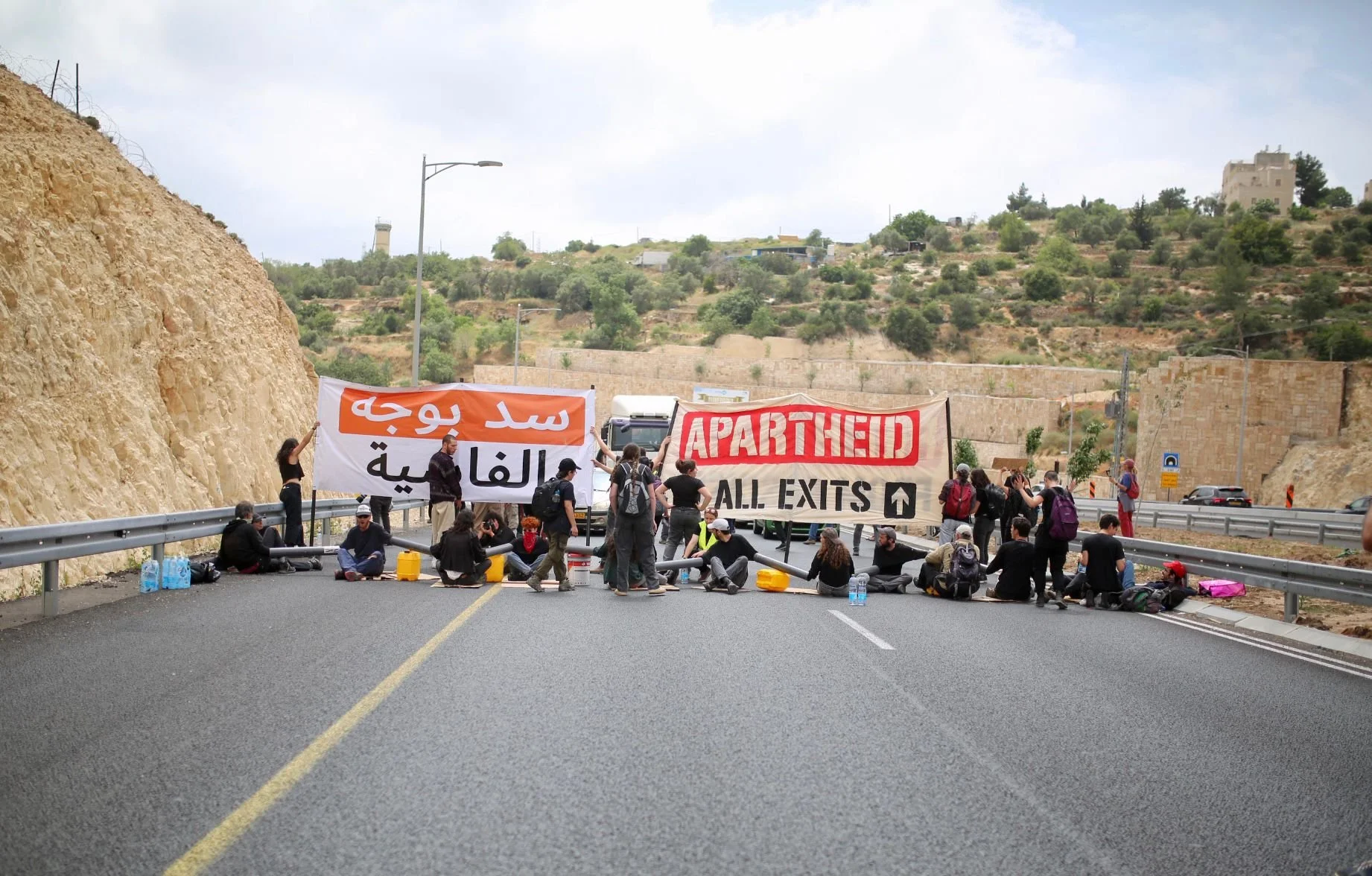
Images, clockwise from top left: closing down the highway on Jerusalem Day; kids from Masafer Yatta enjoying a newly built swing in the Firing Zone; kids in Burin celebrate the Kite Festival with their families.
In 2025, after suffering the painful loss of Palestinian community leader and human rights activist Awdah Hathaleen (who was murdered by an Israeli settler), we ran a pilot project called the Summer Organizers Summit. This project differed from our usual delegations in that we focused on directly recruiting representatives from a wide range of grassroots Jewish pro-Palestine organizations to connect and collaborate with each other and our Palestinian and Israeli partners. We brought together 16 organizers from France, the Netherlands, the UK, the US, Brazil, Argentina, and Canada representing Rabbis4Ceasefire, Erev Rav, IfNotNow, European Jews for Palestine, Na'amod, Vozes Judaicas por Libertação, Judies x Palestina, Global Jews for Palestine, Independent Jewish Voices, and Jewish Voice for Peace. We met with Palestinians from Masafer Yatta in the south of the West Bank to Burin, Jenin, Nablus, and Tulkarem in the north. We spent time in Jerusalem planning and learning with Israeli and other Jewish movement partners from Free Jerusalem, All That's Left: Anti-Occupation Collective, and Green Olive Collective. Over the course of our time together, we developed plans and projects to continue supporting one another and movement communities on the ground after returning home.
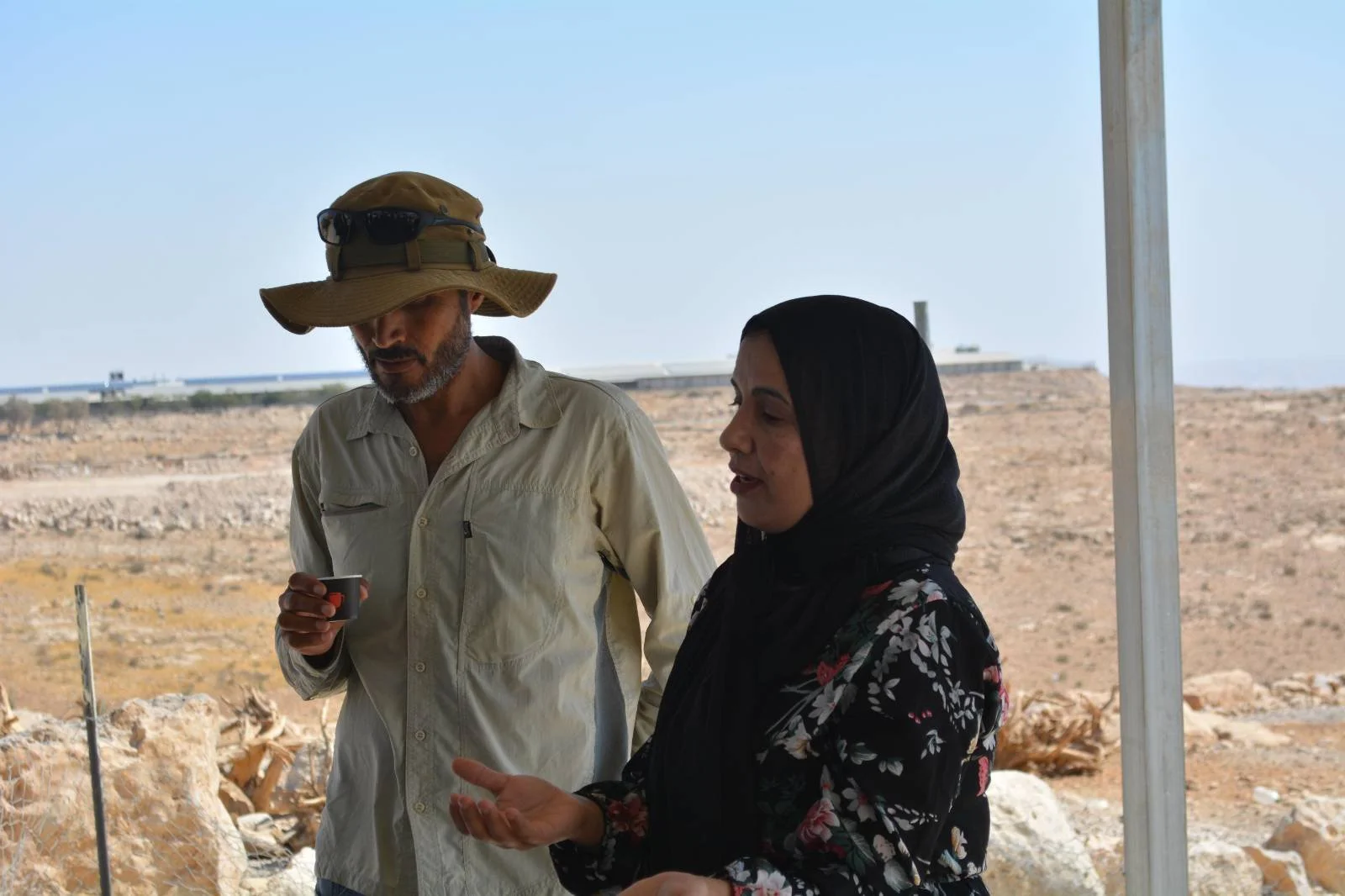
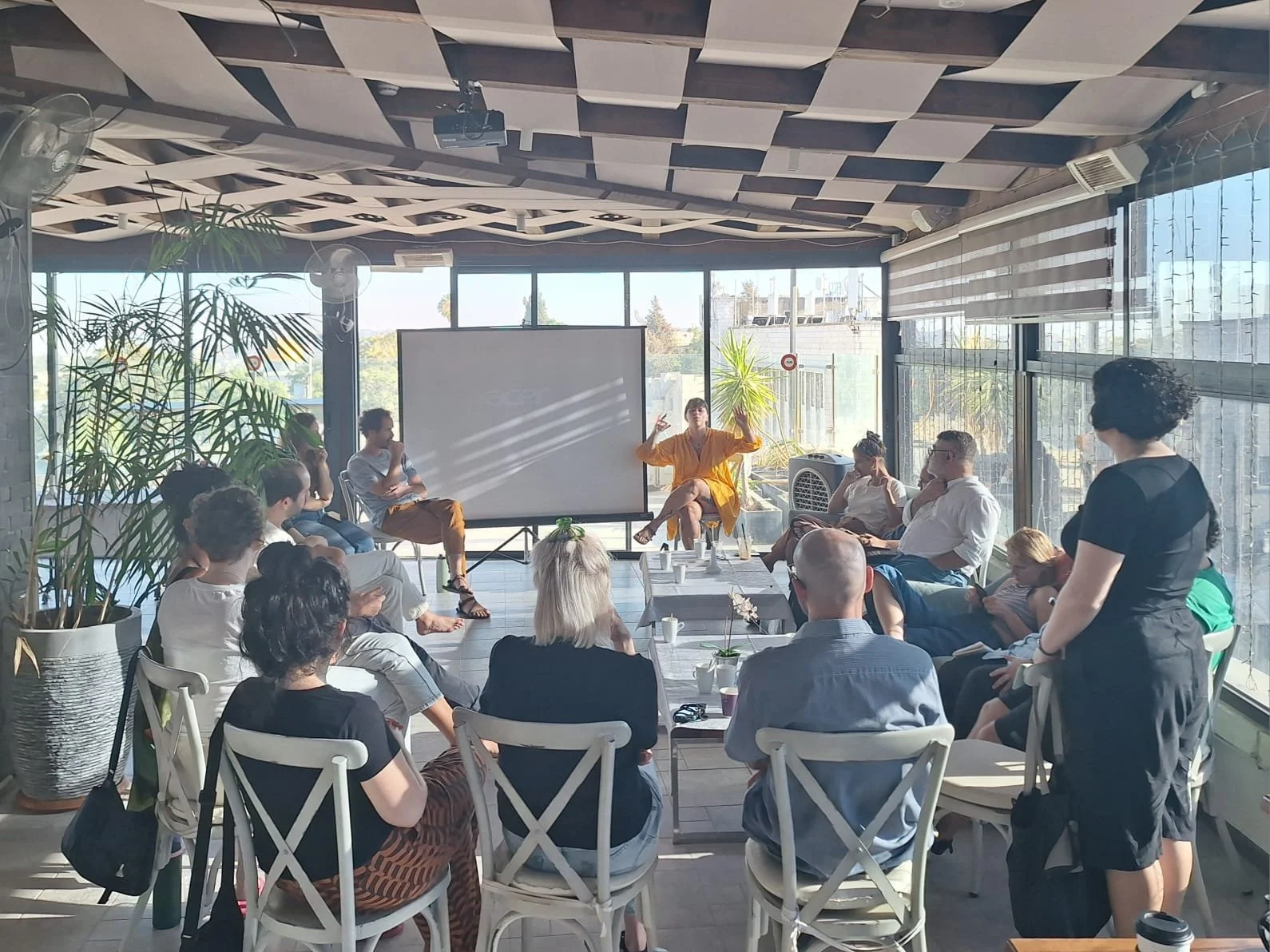
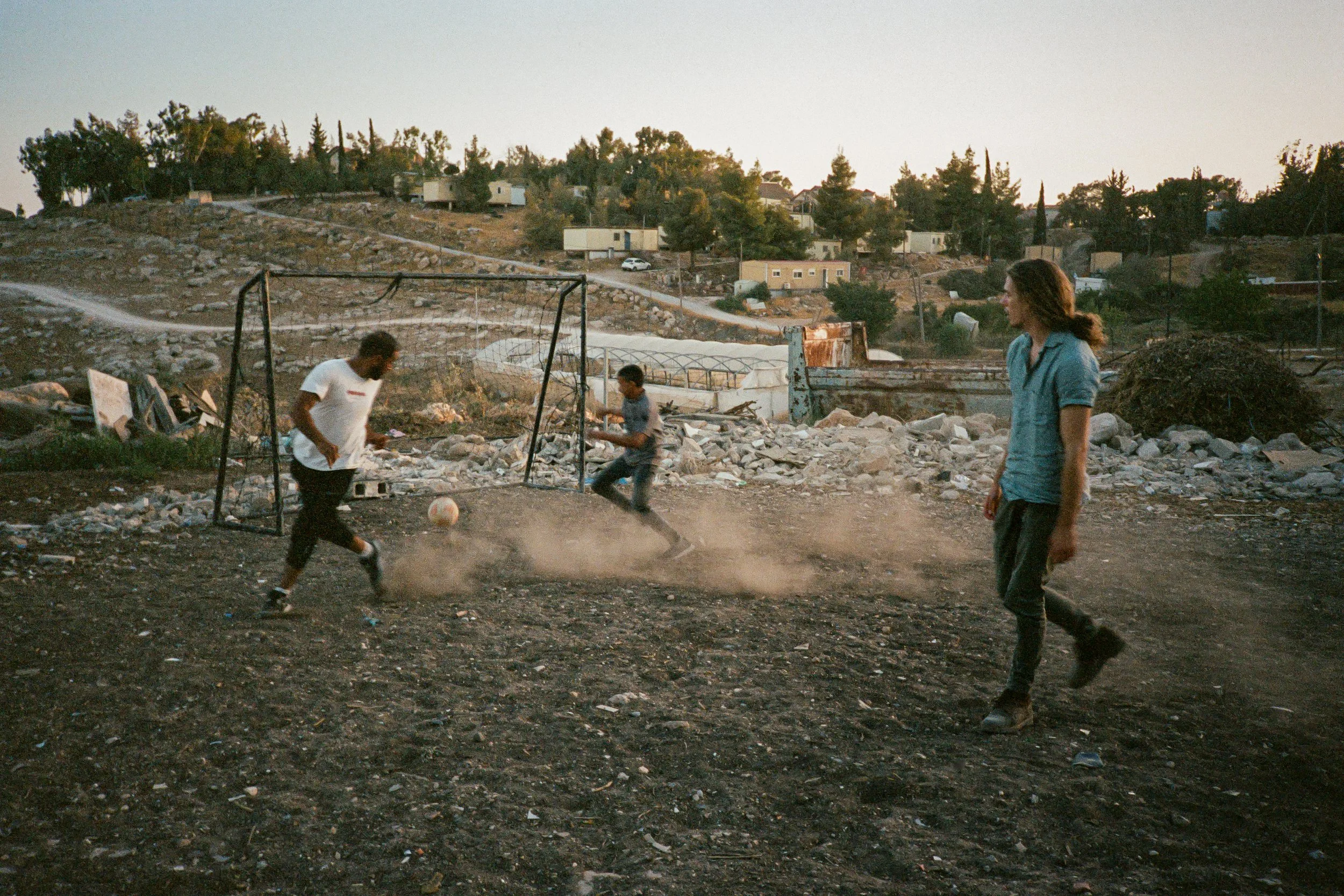
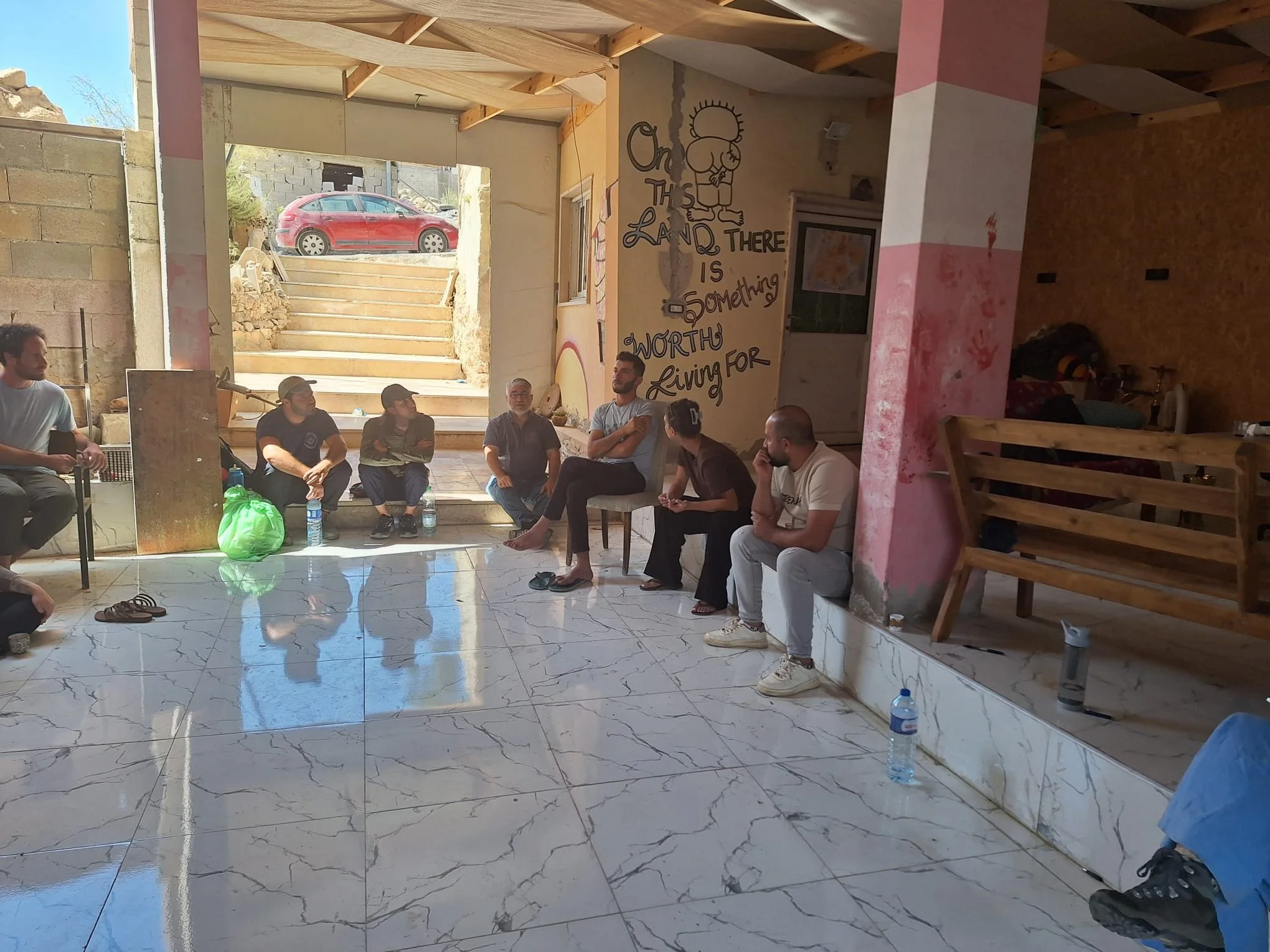
Images, clockwise from top left: Eid and Na’ama from Umm al-Khair share about the hunger strike that women in Masafer Yatta led to return Awdah Hathaleen’s body to his family; organizers present information to each other about their local Palestine solidarity work; a CJNV activist playing football with residents of Umm al-Khair; Basel and Hamdan Ballal, co-directors of ‘No Other Land’, speaking with CJNV delegates in Tuwani.